 |
||
|
||

Home > TERATEC FORUM > Workshops
 |
The essential meeting place for all digital players Simulation . HPC/HPDA . Artificial Intelligence . Quantum Computing |
Keynote - From 9:30 a.m. to 9:45 a.m. |
2026: A Significant Year for the HPC/Quantum/AI Community
Didier Besnard, President, Teratec
The year 2026 brings a wealth of developments in our fields of high-performance computing, artificial intelligence, and quantum computing, both in France and across Europe.
It marks a new milestone with the arrival of exascale computing in Europe, the development of European infrastructure dedicated to AI, and the first integrations between high-performance computing, AI, and quantum technologies. Above all, however, it reflects a profound evolution in our ecosystem: AI is now being integrated into HPC and simulation, while HPC is becoming an essential infrastructure for the development and deployment of AI on a large scale.
These developments raise new technological, industrial, and European questions: mastery of architectures and software, access to computing capacity and data, energy efficiency, skills, and the ability to develop technologies and applications in Europe that will enable us to remain competitive.
It is in this context that 2026 is also an important year for Teratec and its Forum, with a new venue—the Palais des Congrès in Paris—and an evolving format designed to better reflect the transformations taking place within our community.
The Forum should be a place where participants can understand major technological developments, share research advances, and assess how these technologies align with the needs of industry. It should also foster dialogue among the various stakeholders in the ecosystem by strengthening the links between research, innovation, and industry—particularly through startups and new applications.
Another goal is to better support the widespread adoption of these technologies. Continuing education in HPC and AI is becoming a key challenge for companies, while raising awareness of quantum technologies is essential to enable engineers and researchers to anticipate their arrival and take advantage of them.
Over the course of two days, the Teratec Forum will provide an opportunity to put these developments into perspective through keynote speeches, roundtables, and workshops, as well as through demonstrations and discussions with exhibitors.
Discussions will cover topics ranging from technological mastery and data protection to AI in industry, simulation, trust in computing, European infrastructure, and the development of quantum computing.
It is this diversity of approaches and stakeholders that makes our community so rich. The Teratec 2026 Forum should enable everyone to better understand where we stand, the trends that are emerging, and the opportunities they present for research, industry, and innovation in Europe.
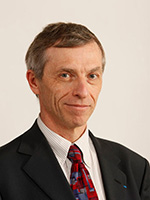 |
Biography: Born in 1955, Didier Besnard is a graduate of the École Nationale des Ponts et Chaussées. He joined the Military Applications Division at the CEA in 1979. In 1991, he became head of the department responsible for all simulation software. Throughout this period, he made numerous visits to Los Alamos National Laboratory (USA) as a visiting researcher in the field of turbulent flow modeling. In 1994, he received the “Science and Defense” award, presented by the Minister of Defense, for his work on “hydrodynamic instabilities and mixing turbulence .” From 1997 to 2000, he served as head of the Department of Thermo-Hydraulics and Physics at the CEA in Grenoble, a department whose activities included R&D for industry on nuclear reactor cooling systems, the nuclear fuel cycle, and non-nuclear energy technologies.
In 2000, upon returning to the CEA’s Directorate of Military Applications, he was appointed director of the Simulation Program, which ensures the reliability and safety of French nuclear weapons without the need for new nuclear tests. In December 2008, Didier Besnard joined the Ministry of Defense and became director of the Gramat Research Center, a facility under the General Delegation for Armaments. Following the transfer of the Gramat center to the CEA, Didier Besnard returned to the CEA and continued in his role until the end of 2012. From 2013 to 2018, Didier Besnard served as Director of the CEA Tech en Région Institute, which was established in 2013 within the CEA’s Directorate of Technological Research. Today, the CEA Tech en Région Institute comprises seven regional technology transfer platforms in Grand Est, Hauts-de-France, Nouvelle-Aquitaine, Occitanie, Pays de la Loire, Provence-Alpes-Côte d’Azur, and Brittany. Their mission is to support manufacturers in these regions—particularly small and medium-sized enterprises (SMEs)—in their innovation efforts and, thereby, contribute to their competitiveness. In early 2019, he was appointed Deputy Director of Technological Research at the CEA, and from 2022 through 2024, he served as scientific advisor to the CEA’s High Commissioner in the field of HPC. He was elected Chairman of the Board of Directors of Teratec in May 2025. Didier Besnard is an Officer of the National Order of Merit. |

To participate in this keynote, please register on the Teratec 2026 Forum website >>>>